Publicaciones / Informe
Informe · septiembre de 2026
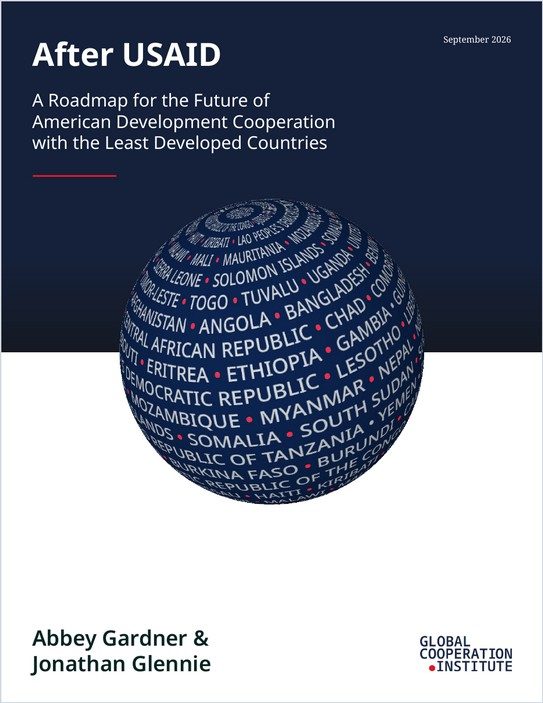
After USAID
A Roadmap for the Future of U.S. Development Cooperation with the Least Developed Countries
Abbey Gardner & Jonathan Glennie
Resumen.
Esta página aún no está disponible en español, por eso se muestra en inglés.
This report builds on more than fifteen years of research begun at the UN under President Bill Clinton and Dr Paul Farmer. It asks a simple question about the 44 least developed countries: when the aid money is gone, what remains?
It is aimed at both US parties as they design what comes after USAID. It was developed with the g7+ group of fragile and conflict-affected countries, grounded in the agenda of the Accra Reset and Africa CDC, and submitted to the UN as input on making country ownership a reality.
Hallazgos principales.
1Aid has bypassed the state
Less than 1% of USAID's FY2024 funding went directly to partner governments.
2National systems work
Where more aid went through national systems, progress on the Millennium Development Goals was faster.
3Four principles for what comes next
Finance national plans; strengthen national and local economies; invest in high-quality public services; and judge aid by what countries can do once it ends.
Cómo citar
Gardner, A. and Glennie, J. (2026). After USAID: A Roadmap for the Future of U.S. Development Cooperation with the Least Developed Countries. Bogotá: Global Cooperation Institute.